

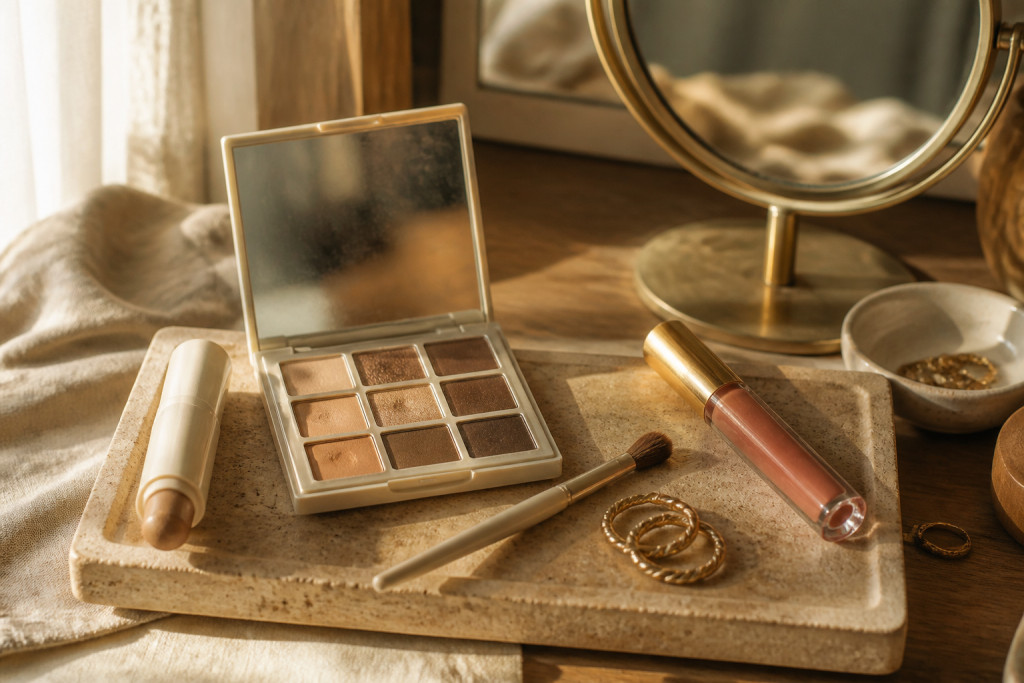

My first time trying a smoky eye I paid $58 for a palette and looked like I had been crying under stage lights. Learning how to apply eyeshadow makeup so it looks blended, not muddy changed that in one week.
This guide shows the specific order, the brushes that actually work, and an under-$40 starter kit so your eyes read soft and intentional, not overworked.
Search interest for “how to blend eyeshadow” has climbed in recent years on Google Trends (2024), so you are not alone in wanting cleaner results.
I’m aiming for soft glam energy here—polished, lived-in, daytime to dinner. Budget: around $40 to $130 to build a reliable kit, under $30 to start.
This suits warm or neutral undertones best, and anyone who wants less fuss with more payoff. I’ve noticed a move toward cream-to-powder looks lately; they layer nicer in real life than on camera.
1. Start with the Glow: Skin Prep and Sheer Base


Begin with skin so the eyes sit on a soft, even canvas. A thin hydrating base prevents powders from looking patchy.
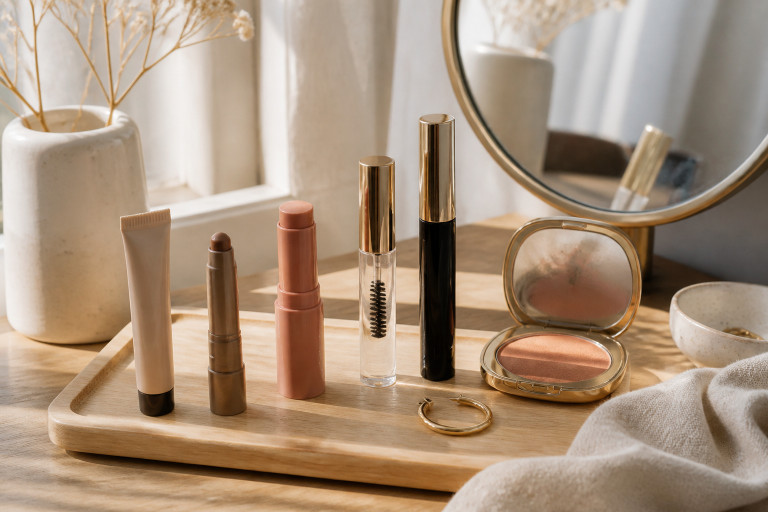
I use a lightweight skin tint and spot-conceal under the eye where needed. Try a Hydrating skin tint with SPF 30 around $16 to $36 and a Sheer concealer stick in warm peach around $8 to $18.
The visual rule: even tone, light texture. Creamy bases and minimal powder keep the lid from drying out, which is the root of muddy blending.
Common mistake: powdering the lid first. Powder can absorb cream and cause patchy, uneven color. Do your skin, then prime the lid gently.
When the base is balanced, color layers blend into skin rather than sitting on top. The result reads soft, not cakey.
2. Layer Cream Color in Three Strategic Places


Cream shadows are the secret when you want a blended, lived-in lid. I place cream in three spots: inner lid, center lid, and outer lid/crease.
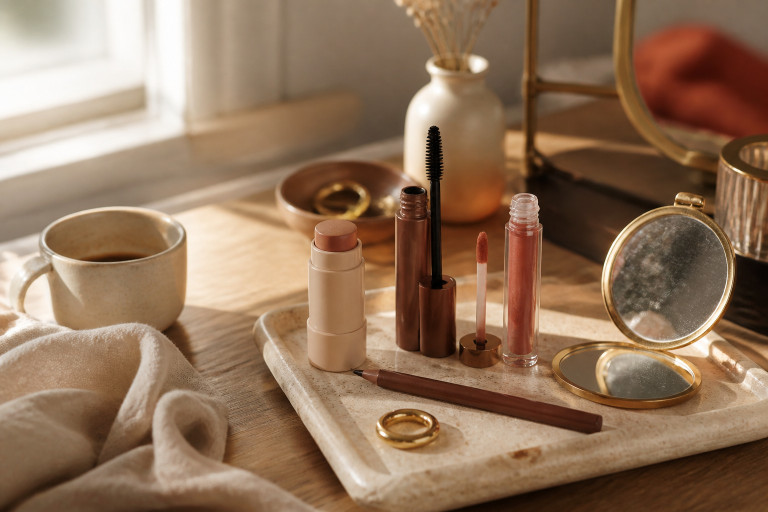
Use a cream formula like a Cream eyeshadow stick in warm caramel around $10 to $22 and a Small flat shader brush synthetic around $6 to $18 for precise placement.
The idea is tonal layering: cream gives depth and sheen, then matte powder refines edges. Apply with fingertip or flat brush, then tap to blend outward.
What most people do wrong is piling six shades on the lid. Limit to two cream tones and one deeper crease point. Too many finishes becomes muddy.
Layering cream first creates a whip-soft base that powder shades can melt into. The result is seamless color that still reads modern.
3. Define Without Hardness: Soft Eye and Brow Work
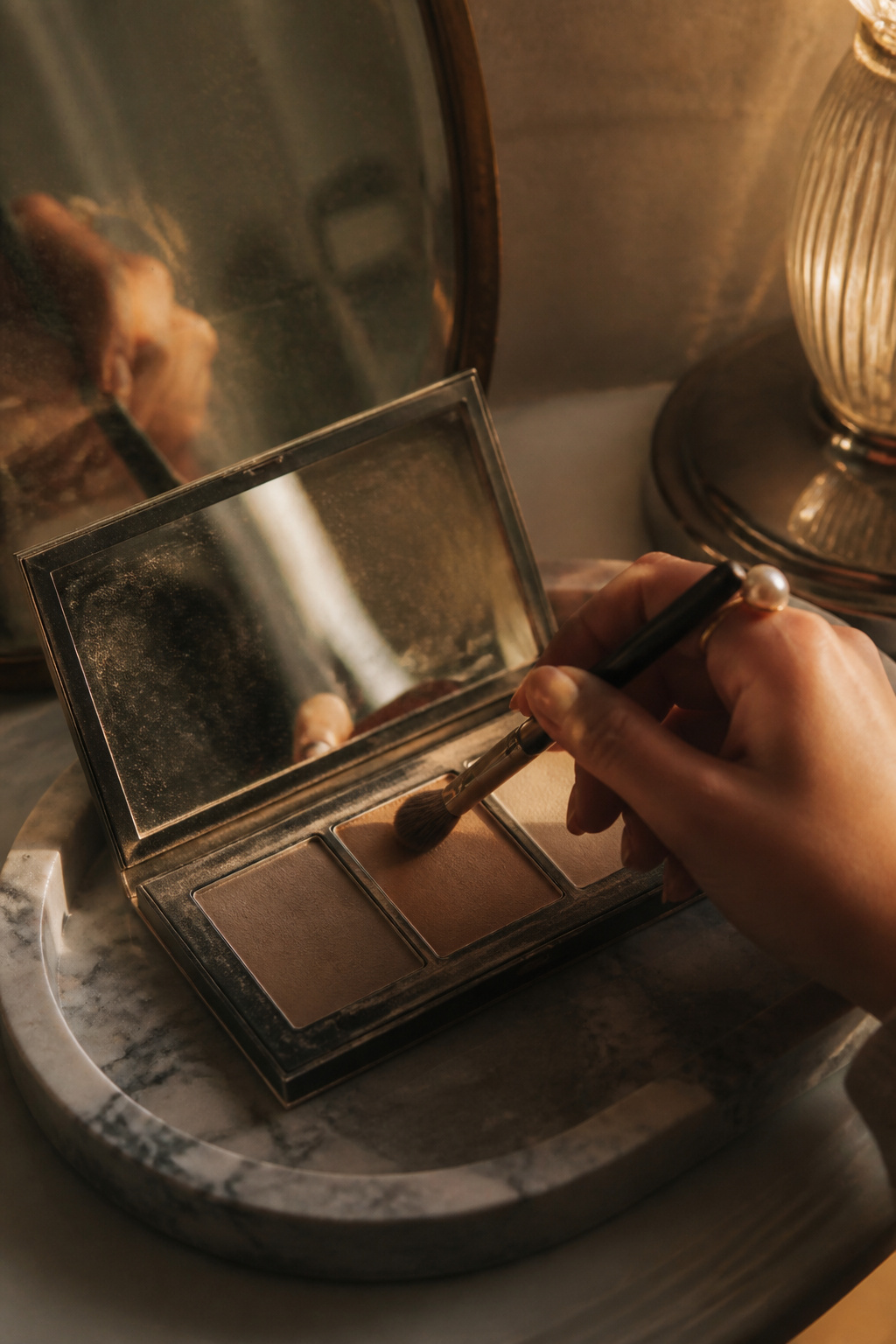

This phase is where eyes become sculpted, not harsh. Use a fluffy blending brush to diffuse the edges and a small pencil brush only for shadow close to lashes.
I reach for a Fluffy blending brush size medium around $8 to $28 and a Neutral matte eyeshadow palette 9-pan around $12 to $40.
The visual principle here is gradient. Move color from dark to light with soft circulations. Keep pressure light; slow circular motions blend farther than force.
A common misstep is using a dense brush to blend. That drags pigment and creates a harsh halo. Use fluff, not scrub.
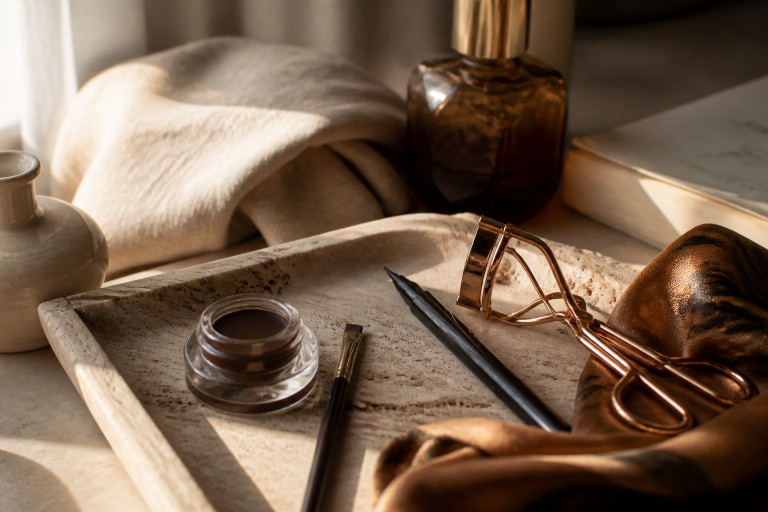
Pair brows by brushing and setting with a clear or tinted gel. Try a Clear brow gel around $6 to $16.
Do this and the eye looks polished, not overly contoured.
4. Finish with Tonal Lip and Subtle Setting


A soft eye needs a tonal finish so nothing fights for attention. I pair the look with a tinted lip oil and light misting of setting spray.
My go-tos: Tinted lip oil sheer rose around $7 to $18 and a Lightweight setting spray 3.4 oz around $8 to $20.
Also dust a whisper of Translucent setting powder only where creasing happens. The trick is targeted placement, not full-face mattifying.
Ugly truth: finishing sprays are not a shortcut for poor blending. If lines are harsh, the mist only locks them in. Fix the blend first.
A tonal lip keeps the palette cohesive. The result reads curated and effortless, not matched or flat.
Common Styling Mistakes to Avoid
Mistake: Over-blending with a dense brush
Why it doesn't work: Smears pigment into a muddy wash, loss of shape.
Do this instead: Use a medium fluffy blending brush and light circular motions.
Mistake: Skipping lid primer or cream base
Why it doesn't work: Powder sinks into dry patches, colors fade unevenly.
Do this instead: Start with a thin layer of cream eyeshadow stick as a primer for adhesion.
Mistake: Using too many shimmery shades at once
Why it doesn't work: Reflective particles can clash and read muddy on camera.
Do this instead: Limit shimmer to one focal point. Try a single shimmer pot in soft champagne.
What You'll Need for This Look
Face & Base Essentials
Hydrating skin tint with SPF 30 around $16 to $36
Sheer concealer stick in warm peach around $8 to $18
Translucent setting powder around $8 to $24
Eyes, Brows & Lips
Cream eyeshadow stick in warm caramel around $10 to $22
Neutral matte eyeshadow palette 9-pan around $12 to $40
Fluffy blending brush medium around $8 to $28
Clothing Staples
White cotton crewneck tee around $12 to $30
Straight leg high waist jeans around $30 to $90
Shoes, Bags & Jewelry
Leather loafer women classic around $45 to $150
Leather tote bag tan around $60 to $250
Gold chunky hoop earrings 14k plated around $10 to $40
Budget Swaps
Drugstore eyeshadow palette neutral around $8 to $18
Affordable blending brush set around $7 to $20
Shopping Guide for This Look
Buy the brush first: A good blending brush matters most; grab a Fluffy blending brush medium $8 to $28.
Seasonal tip: Shop palettes in fall sale windows; palettes restock in September and Black Friday often has deeper discounts. See Neutral matte palette 9-pan $12 to $40.
Thrift hack: Pair a thrifted blazer with a new Leather tote bag tan $60 to $250 for polish on a budget.
Splurge vs save: Splurge on one quality brush, save on palettes like Drugstore eyeshadow palette neutral $8 to $18.
2025 trend note: Cream-to-powder finishes are staying; opt for a Cream eyeshadow stick in warm caramel $10 to $22.
Conclusion
Start with the brush. Good tools make blending effortless and keep color from turning muddy.
Pick one element to upgrade this week, like a cream base or a quality blending brush, and practice placing color in three zones.
Which eyeshadow shade are you trying next—soft caramel, muted mauve, or classic taupe?